Home Elevators in India: Benefits, Types & Installation Process
Post Date : Mar 10, 2026
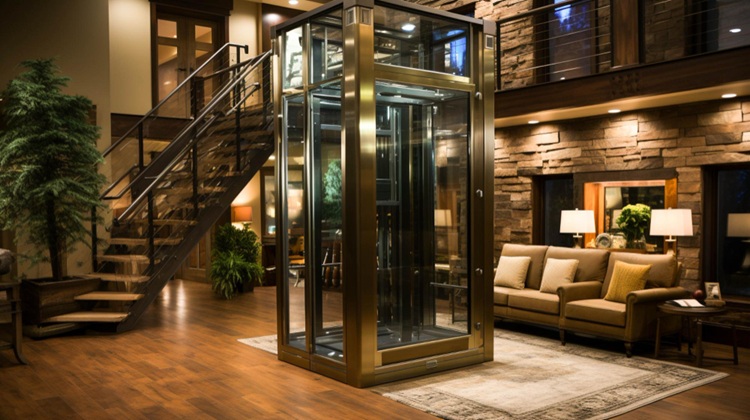
Homes in India are increasingly being built upwards – more and more people are living in multi-story independent houses, duplexes and large villas. Because of this, home elevators in India are no longer just for the very wealthy; they’ve become a sensible, useful answer for present-day families.
Whether your house has three floors, or a lot more, a lift for a house makes getting around every day safer, quicker and much more pleasant for all who live there.
Why Residential Lifts for Homes Are a Smart Investment
The rising number of home elevator fittings throughout India isn’t simply about wanting a luxury. It shows the actual, everyday requirements of many families.
For older parents, or relatives who aren’t very mobile, going up and down the stairs each day is both exhausting and dangerous. A home lift completely solves this problem, and allows them to move between floors without needing assistance from others.
Besides helping with access, having a lift put in also clearly increases the long-term value of your property. Houses which have lifts appeal to buyers and renters who are prepared to pay more, so the investment is good value for money – and more than just the convenience it gives.
Here are a few other reasons why people are making this choice:
-
Moving heavy things – such as groceries, luggage, and furniture – between floors is much easier.
-
All members of the family, not only older people, have less physical strain on them.
-
A neat, up-to-date appearance which goes well with modern house designs
-
Options to integrate the lift with a smart home system, letting you control it using a mobile phone app.
Common Types of Home Elevators Available in India
Each house is different, and each elevator is too. Each sort has a different mechanism, the amount of space it needs, and a different price. Here’s a clear description of the most popular types of home elevators in India at the moment.
-
Hydraulic Elevators
Among the most common choices for Indian houses, hydraulic lifts work using a piston system powered by liquid. They give a smooth, quiet journey, and are available in a wide variety of cabin sizes. A pit is usually needed at the bottom. These are best for houses with two to four floors.
-
Traction or Gearless Elevators
These lifts use steel ropes and a counterweight system. They are good with energy, work quietly, and are good in taller houses. Machine-room-less (MRL) types are now often available, reducing the space needed for fitting.
-
Pneumatic or Vacuum Elevators
Vacuum lifts work on differences in air pressure inside a cylindrical shaft. They are clearly different in appearance, do not need a pit or machine room, and can be fitted into existing houses with very little change to the structure. They are excellent small elevators for houses where it is important to cause as little disturbance as possible to the existing design.
-
Shaftless and Screw-Drive Elevators
Shaftless lifts are small and made for houses where space is limited. Screw-drive types use a threaded spindle to move, and are known for being reliable and needing little maintenance. Both types reduce the need for large building work.
Home Lift Cost in India: A Realistic Price Guide
The home lift cost in India depends on many things – the type of lift you choose, the size of the cabin, how many floors it serves, the brand, and how much customisation you want.
Here’s a general price range to help you make plans:
|
Elevator Type |
Approximate Price Range (INR) |
|
Basic Hydraulic Lift |
₹6 lakh – ₹10 lakh |
|
Premium Traction Lift |
₹12 lakh – ₹18 lakh |
|
Pneumatic Vacuum Lift |
₹11 lakh – ₹22 lakh |
|
Luxury Glass Elevator |
₹18 lakh – ₹25 lakh+ |
These prices generally cover the lift unit itself. Fitting costs, building work such as pit and shaft construction, and yearly maintenance costs are usually calculated separately.
Continuing maintenance usually costs about 3% of the total lift cost each year, and covers planned checks, oiling, and checks on parts.
How the Home Elevator Installation Process Works
Knowing the fitting process before you start helps you plan your timetable, your budget, and the design of your house with much more confidence.
Step 1: Site Assessment
A qualified elevator technician visits your house to look at the space available, the floor height, the structural load-bearing capacity, and the best possible place for the lift shaft or casing.
Step 2: Design and Customisation
The type of lift, cabin size, door style, and inside finish are decided at this point. You can choose a standard cabin or a fully custom-made design to match the inside of your house.
Step 3: Civil Work
For most lift types, this involves preparing a base pit and building or lining the shaft. Shaftless and pneumatic types greatly reduce this step, saving time and reducing the total cost.
Step 4: Lift Installation
Qualified engineers fit the mechanical drive system, cabin, doors, safety features, and control panels. Electrical connections are tested and made safe at every stage.
Step 5: Testing and Certification
Once fitted, the lift is load-tested and given a full safety check. Residential lifts in India must meet the rules of the Bureau of Indian Standards (BIS) before being approved for use.
The whole fitting time usually falls between two and six weeks, depending on the lift type and the amount of building work needed.
The Right Lift, Built for Your Home
Home elevators in India have grown from being a top-level luxury to being a really useful home improvement. They improve everyday comfort, help older relatives, increase property value, and bring a level of ease which changes how a multi-floor house feels to live in.
When choosing your lift, concentrate on your house’s design, the number of floors, your budget, and who will use the lift most. The right lift partner will help you through every option and make sure that fitting is safe, approved, and made to last for years.
Polo Elevators bring exactly that knowledge to your home – with lift solutions made especially for Indian houses, Indian spaces, and Indian families.