What Is the Difference Between a Home Lift and a Traditional Elevator?
Post Date : Jul 31, 2026
Every real estate brochure in Delhi says "lift." The builder says it. The architect labels the shaft with it. That word covers two different machines. The gap between them decides how much space the building loses and what the owner spends across two decades. Home lift vs elevator is an engineering question, not a branding one.
A traditional elevator handles hundreds of passengers daily at high speed across ten or twenty floors. Industrial motors, fireproof shafts, statutory inspections on a fixed calendar. A home lift moves a family of four between two or three floors a few dozen times a day. Same vertical direction. Entirely different machine underneath.
Where the Two Machines Separate at the Design Level
A commercial elevator is engineered for duty cycle. The motor, brakes, and door operators are all sized to run thousands of trips every week without overheating. The cabin holds eight to twenty passengers. Travel speed reaches several meters per second. Everything inside the machine room is built for endurance across decades of continuous service.
A home lift is built around a different set of priorities entirely. Low noise because the shaft shares a wall with the bedroom. Compact footprint because the floor plan was not drawn around a lift shaft. Gentle acceleration because the passengers are elderly parents and young children, not employees rushing between office meetings.
A Residential Lift Comparison on Speed, Capacity, and Finish
The numbers tell the story faster than any brochure comparison table. A residential lift comparison on the three metrics that shape the buying decision, speed, capacity, and cabin finish, shows how wide the gap actually runs between these two machine categories:
-
Commercial elevators travel at one to two and a half meters per second. A home lift sits between 0.15 and 0.4. The gap barely matters across two floors. Above five storeys, the speed difference shapes the entire wait time experience.
-
Commercial cabins hold six to twenty passengers. A home lift fits three to four people comfortably. Smaller cabin means lighter rails, a smaller motor, and a narrower shaft. That footprint saving is exactly what a residential floor plan needs.
-
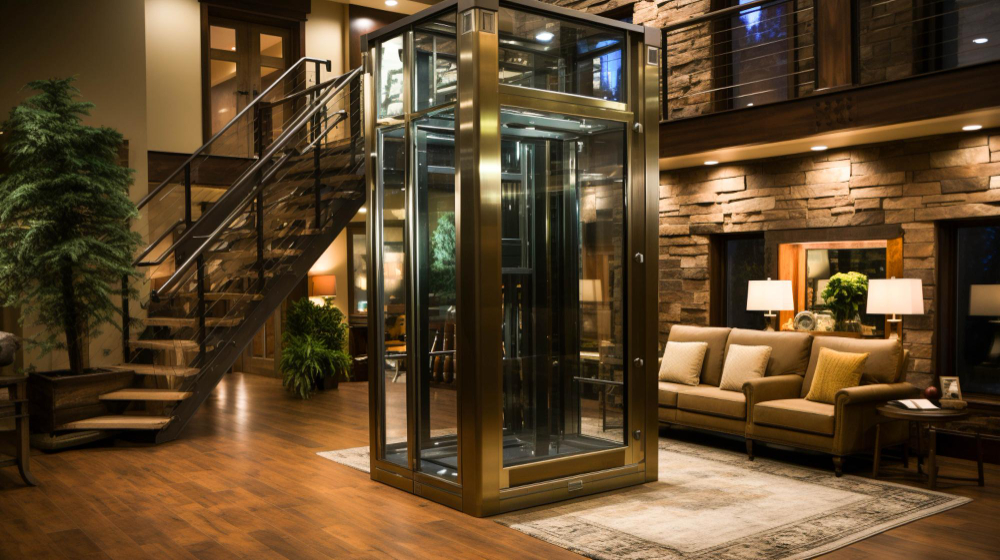
Commercial interiors run to stainless steel walls, rubber flooring, and fluorescent lighting. A home lift cabin matches the house. Wooden panels, glass doors, LED downlights. The cabin joins the interior design rather than hiding behind steel doors as an industrial box.
The Shaft and Civil Work Each System Demands
A commercial shaft is a concrete column poured from basement to machine room slab. Walls run 200mm thick. Fire rated. Ventilated. The pit can run a metre deep depending on lift speed and buffer type. The shaft alone consumes significant floor area on every level it passes through.
A home lift needs far less structure. Many residential systems run inside a mild steel frame bolted to the building, no poured shaft at all. Pit depth drops to 150mm for some hydraulic models. Overhead clearance shrinks. The civil cost difference between the two approaches is large enough to shift an entire project budget line.
How the Motor and Drive System Change Between the Two
Commercial elevators run on three phase power. Large motors draw heavy current. The electrical supply needs a dedicated transformer or high capacity connection from the utility. The switchgear and cabling during installation look like a construction site, not a family home. Single phase simply cannot deliver the current a commercial motor demands.
A home lift connects to the domestic single phase supply with a dedicated breaker and a voltage stabilizer. The motor is smaller, the controller simpler. No transformer, no industrial switchgear. The installation electrician works with the same board that feeds the rest of the house, and the drive options split differently too:
-
Traction drives use ropes and a counterweight. Efficient and quiet. Best for homes with a shaft arrangement that provides enough overhead clearance to mount the sheave above the top landing without losing terrace space.
-
Hydraulic drives push a piston upward using oil pressure. No ropes, no counterweight. Extremely smooth at low speeds. Best for two to three floor homes where travel distance stays short and the owner wants the quietest ride.
Home Elevator Differences in Safety and Code Compliance
Both machines carry safety devices. Governors, interlocks, rescue systems. The core protection is similar. The home elevator differences show up in the regulatory framework around each system and in how the safety features are sized for the operating environment they serve:
-
Commercial elevators carry a statutory inspection certificate renewed annually under the Indian Lift Act. Home lifts in many states fall outside this mandate currently. Responsible manufacturers build to the same safety standard regardless of what the local code requires today.
-
Commercial doors use heavy duty operators rated for hundreds of thousands of cycles per year. Home lift doors are lighter, sometimes manual with a swing action and a mechanical interlock. A manual door meeting the interlock standard works perfectly at a household pace.
What the Daily Ride Actually Feels Like in Each Machine
Step into a commercial elevator during the morning rush and the experience is functional. Doors open fast. The cabin accelerates hard. The ride covers ten floors in seconds. Passengers stand shoulder to shoulder facing a digital floor counter. The system is built to move volume, and the ride reflects that priority. Speed over comfort.
A home lift ride is a different experience entirely. The doors close slowly. The cabin rises at walking pace. The travel takes a few seconds longer but the motor noise is barely audible and the acceleration feels gentle enough for an elderly parent holding a railing. Nobody is rushing. The lift matches the tempo of the household rather than forcing the household to match the machine.
The noise difference matters more than most buyers realise during the showroom visit. A commercial lift motor is designed for a machine room separated from occupied space by concrete walls and a slab. A home lift motor shares a wall with the drawing room. The vibration tolerance that works inside an office building becomes a daily irritation inside a quiet house.
What Each System Costs to Install and Run Across a Decade
A commercial elevator costs more to buy, more to install, and more to power. The motor draws heavier current. The shaft consumes more concrete. The three phase electrical connection adds infrastructure cost before the lift even arrives. A home lift avoids all three of those overheads from the start.
The running cost gap continues well past the installation date:
-
A commercial lift running twelve hours daily pulls a monthly electricity bill several times higher than a home lift moving a family thirty or forty times a day. The home lift sits on the bill somewhere between the water heater and the air conditioner. Barely noticeable against the rest.
-
Commercial lifts need monthly service visits, quarterly rope and brake checks, and annual statutory audits with a licensed inspector. A home lift needs two to four visits per year. The annual contract sits at a fraction of the commercial figure, and parts last longer at the lower usage intensity.
Which Machine Actually Belongs in Your Building
The choice turns obvious once the building is honest about its traffic. A four storey office with sixty employees needs a commercial elevator. A three storey home with a family of four needs a home lift. The trouble starts when a contractor pushes the bigger machine into a residence because the margin runs higher.
A home lift vs elevator decision made correctly at the planning stage saves money on civil work, electrical supply, monthly power, and annual service for the full building life. The technical team at Polo Elevators evaluates traffic, floor count, and structural conditions before recommending either system. The recommendation fits the building.